
About
My name is Tim Haft. I created Punk Rope in 2004 to inspire folks to move more, play more, and connect more.
In my opinion, jump rope is the Fountain of Youth. It improves cardiovascular conditioning, bone density, strength, coordination, agility, speed, mobility, rhythm, timing, and your waistline.
It’s no wonder that some of the greatest athletes of our time—Serena Williams, Steph Curry, Saquon Barkley, and Sue Bird—incorporate jump rope into their training.
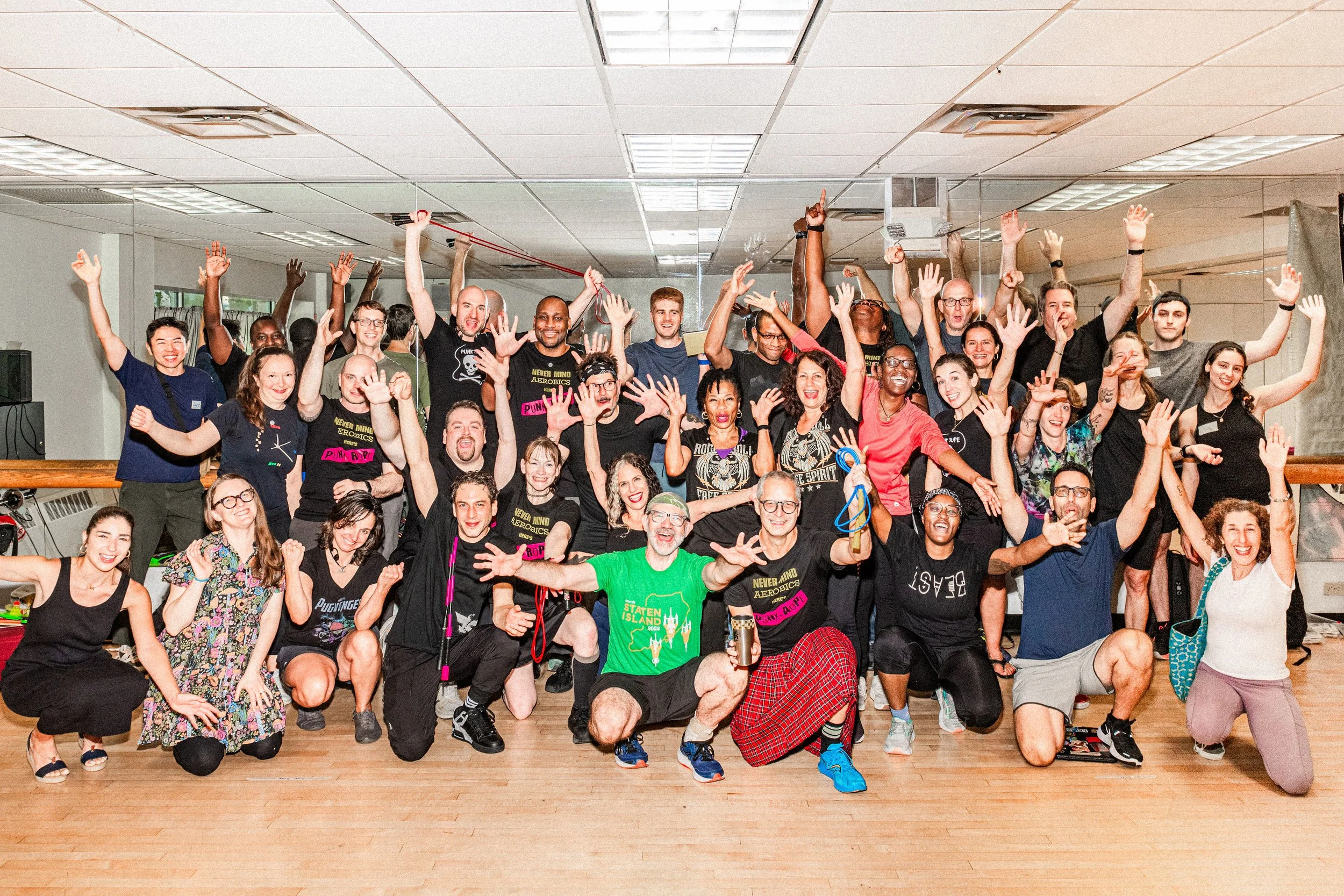
Punk Rope blends jump rope, bodyweight training, and fitness games, and is designed for all ages and fitness and skill levels. Our students have ranged from 8 to 88. Many haven’t jumped rope since elementary school and some have never picked up a rope until now.
Join us for a Punk Rope class every Wednesday evening at 7:30pm at the 14th Street Y in New York City. We also hold outdoor classes in various locations.
Although learning to jump rope can be intimidating at first, a good coach will set you at ease and put you on the path to success. You might find our YouTube tutorials and Jump Rope Manual to be helpful.
In addition to Punk Rope classes, we offer:
• a jump rope instructor certification
• jump rope clinics, seminars, and workshops
• jump rope lessons
• the annual Punk Rope Games
For more information, email me or call 646-263-9128.
Subscribe to our quarterly newsletter to receive exclusive discounts and content.
Jump Ropes
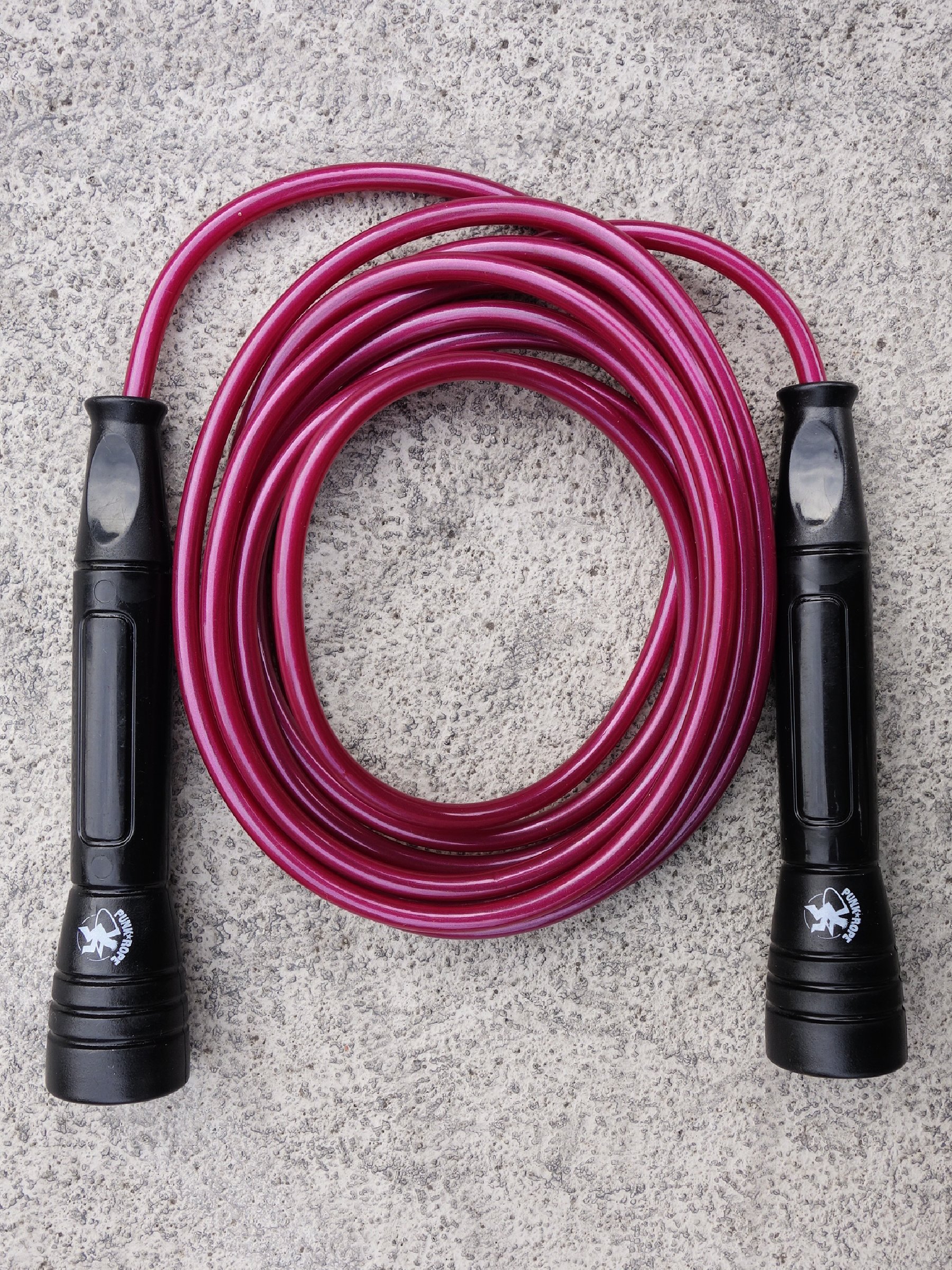
Our 5mm PVC jump ropes with 5-inch smooth-turning handles are rated 5 out of 5 stars by the American Council on Exercise and Jump Rope Veteran.
The 5mm cord is hefty enough to provide good sensory feedback, but light enough for you to generate some serious speed.
Our jump ropes are available in 5 sizes to accommodate jumpers up to 6’ 4”, but can be easily shortened via the included snap lock. They’re appropriate for all skill levels.
Order 10 ropes or more and get 25% off with the code BULKDISCOUNT.
”In the early days of the pandemic lockdown, I happily purchased my first Punk Rope jump ropes. I learned how to jump using these ropes. The Punk Rope videos taught me the basic steps and, eventually, the double under. Jumping completely changed my body. I jumped for a few years and then thought I was so advanced that I needed professional grade ropes. I splurged and purchased a Crossrope set. I jumped for a year with these ropes and have the scars to prove it—on my knuckles, back, and legs. When I jumped with these expensive ropes, my hands hurt and I stopped doing crosses and double unders. Some of the early joy of jumping rope was gone and I stopped jumping every day. I recently decided to buy a Punk Rope jump rope again, this time in a bright color that screamed fun. My first session with that rope brought back the joy I had lost. Now I’m back to jumping on a daily basis and couldn’t be happier.” — N. Cooper

Certification
There are more than 1,300 Punk Rope-certified Jump Rope Instructors in 33 countries. Some are personal trainers and group fitness instructors while others are physical education teachers, coaches, and parents.
Created in 2005, the Jump Rope Instructor Certification is the ideal credential if you want to launch a jump rope class, offer private jump rope lessons, boost your fitness resume, or level up your own jump rope game.
You’ll learn how to teach the basics of jump rope including proper grip, timing, turning mechanics, injury prevention, rope sizing and selection, plus how to perform 15 of the most effective jump rope steps to improve fitness.
We offer a self-paced home study option ($149) and an in-person option ($199). Most candidates complete the home study option in less than two months although time-to-completion varies a great deal according to a number of factors.
Both the home study and in-person options include .9 CEUs from the National Academy of Sports Medicine and the Athletics and Fitness Association of America. Successful candidates are entitled to a free listing on the Punk Rope website.
Instructor candidates are expected to have basic jump rope proficiency. Remote candidates must demonstrate their competency via video in order to receive their certification. They must also demonstrate their ability to teach a basic jump rope skill, preferably to a beginner. In-person candidates will be assessed live.
The in-person option, led by Punk Rope creators, Tim Haft and Shana Brady, includes five hours of instruction plus a master class. Each participant receives a jump rope and a wrist trainer. Attendees will leave with the knowledge necessary to launch their own Punk Rope class. For information on hosting an in-person certification, contact Tim Haft at 646-263-9128 or punkrope@gmail.com.
There are no certification renewal requirements or certification maintenance fees.
Our Team
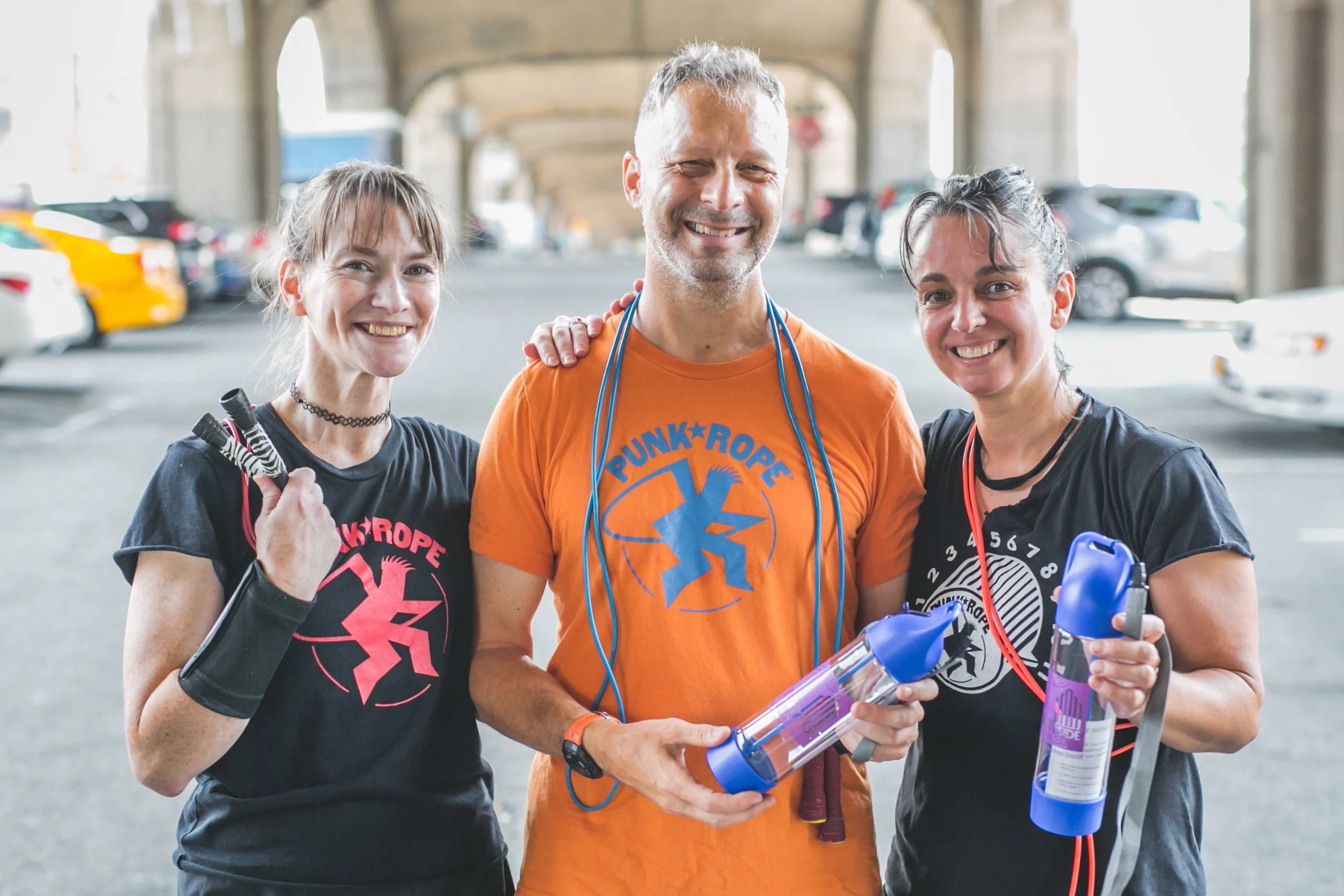
Tim Haft
Tim is the founder and president of Punk Rope. He’s certified as a personal trainer by the American Council on Exercise and holds additional certifications from Precision Nutrition, USA Track & Field, USAFIT, TRX, ISCA (kettlebells), and Resist-A-Ball. Since 1998, Tim has been offering one-on-one and group fitness training to clients of all ages and fitness levels.
Shana Brady
Punk Rope's director of training since 2005, Shana holds a BS degree in exercise physiology plus certifications from the American Council on Exercise, the American College of Sports Medicine, the National Academy of Sports Medicine, and Functional Movement Systems (FMS). She has extensive experience training active older adults well into their 80s.
Big thanks to:
• Heather Wagner for graphic design
• Tom Egan for photography
• The Source Unlimited for printing
• Cheapest Buttons for pins
• Econo Graphics for t-shirts